
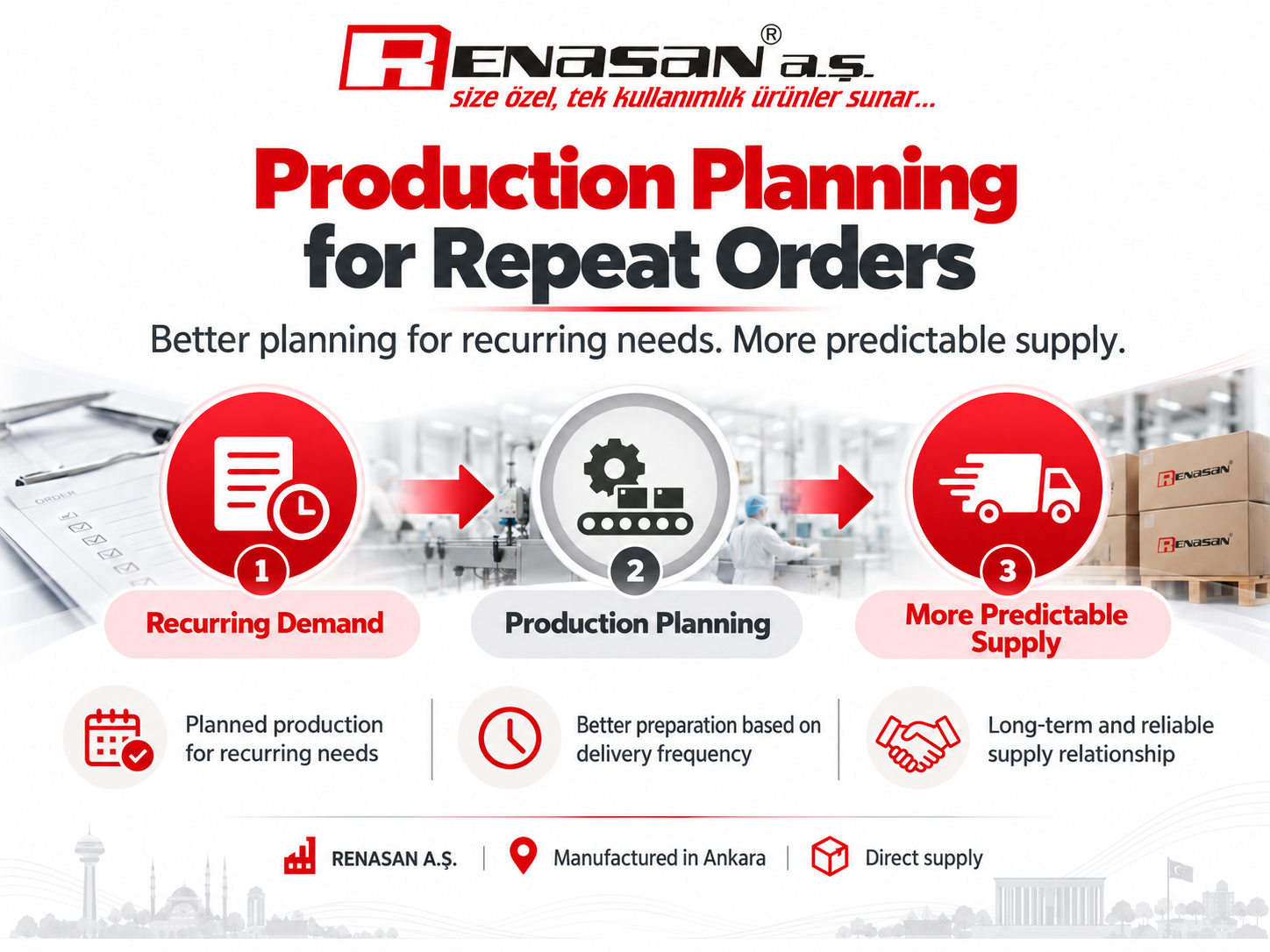
For frequently purchased medical and hygiene consumables, procurement decisions depend on more than unit price. Production planning for repeat orders can help manufacturers and buyers coordinate production, packaging and dispatch when requirements are shared in advance.
Why does production planning matter for repeat orders?
When a buyer provides an indicative order pattern rather than treating every purchase as an isolated transaction, a manufacturer can assess available capacity and suitable production windows. This does not guarantee stock or delivery dates: material availability, production capacity and order terms still require confirmation.
What information should buyers provide?
- Product specification: Product type, size, material structure and any printing or packaging requirements.
- Estimated volume: Approximate monthly or periodic demand and expected variations.
- Delivery frequency: Preferred shipment intervals and target dates.
- Technical approvals: Current sample, artwork, label and packaging versions.
- Lead time: Intended first-order date and planning horizon.
How can a recurring supply arrangement be assessed?
1. Define the recurring requirement
Share the product specification, estimated quantities and preferred delivery pattern.
2. Review production feasibility
At its own manufacturing facility in Ankara, Türkiye, RENASAN can assess whether recurring requirements fit available production capacity and operating conditions.
3. Coordinate packaging and dispatch
Where feasible, both parties can clarify order cycles, packaging needs and shipment frequency before confirming individual orders.
Which product groups may be suitable?
Buyers may discuss repeat requirements for paper and PE-laminated examination table covers, dental bibs, dental unit tray covers, individually packed alcohol wipes and wet wipes. Custom dimensions, printing, packaging and private-label requirements are evaluated according to technical feasibility.
Explore the difference of buying directly from the manufacturer and production capacity and private-label manufacturing for related purchasing considerations.
Discuss repeat-order production planning with RENASAN
Tell us which products you purchase, your approximate monthly or periodic quantities and your preferred delivery frequency. Contact RENASAN to review production feasibility and possible recurring supply arrangements.
Example: planning recurring requirements for examination table covers
Consider a distributor purchasing similar quantities of examination table covers each month. Rather than supplying only the next purchase quantity, the buyer can share recent consumption patterns, expected demand fluctuations and preferred shipment intervals. Specifications such as roll width, sheet dimensions, roll length and paper/PE laminate requirements help establish a consistent basis for quotations. A demand forecast is not automatically a firm purchase commitment; confirmed quantities and terms are agreed separately.
For private-label or printed packaging, buyers should also clarify the approved artwork version, pack quantity, carton configuration and any sample-approval steps. Early coordination can make potential scheduling impacts visible before the next order is finalized.
To keep product details consistent between orders, review our repeat-order product specification guide.
Practical safeguards for a recurring supply plan
Distinguish forecasts from purchase orders
Forecasts help inform capacity discussions, while confirmed quantities, prices and delivery conditions require separate agreement. Review indicative volumes periodically when customer demand changes.
Communicate specification changes early
Changes to dimensions, material construction, print artwork or shipping details may affect production preparation. Share revised specifications with a clear version and approval date.
Review delivery frequency against inventory needs
Preferred shipment frequency should reflect storage capacity and actual consumption. The objective is a workable purchasing rhythm, not an assumption of guaranteed availability or a fixed lead time.
Watch RENASAN manufacturing technology
This video from RENASAN’s own YouTube channel provides a general look at its manufacturing technology. It does not represent a guarantee of capacity or delivery for a particular order.
Frequently asked questions
How should forecasts differ from confirmed orders?
Forecasts help plan potential demand, while quantities, prices and delivery dates require separate written confirmation.
How often should repeat orders be delivered?
Review consumption, available storage, product specifications and shipping arrangements before agreeing on a practical delivery schedule.
What if a product specification changes?
Share updated dimensions, materials, artwork or packaging requirements in a version-controlled document and confirm them before production.
How can buyers reduce supply interruptions?
Monitor consumption trends, communicate demand changes early and confirm ordering and dispatch milestones with the supplier.