
Competitive pricing matters, but for products you purchase repeatedly, being able to obtain the required product again with consistent specifications is equally important.
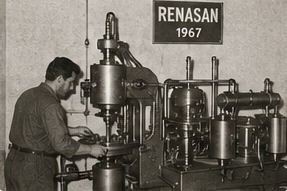
Renasan manufactures medical, dental and hygiene products at its own facility in Ankara, Türkiye and supplies customers directly.
Our objective is not just to receive one order. We aim to be a manufacturer you can work with on an ongoing basis.
Planning for Recurring Requirements
If you regularly purchase a product, sharing the dimensions, expected quantity and any special packaging requirements helps us evaluate the most appropriate production and supply approach.
This can be especially useful for recurring purchases of examination table covers / couch rolls, dental bibs, dental tray covers and individually packed alcohol or wet wipes.
Direct Manufacturer Support
Working directly with the manufacturer gives you one point of contact for repeat orders, technical questions and future product requirements. For customised or branded projects, our Private Label Manufacturing solutions can also be evaluated.
You can review our Laminated Examination Table Cover – Couch Roll range as an example of our medical disposable product portfolio.
Ask for a Quote Before Your Next Order
You do not need to be an existing Renasan customer. Send us the product and approximate quantity before your next purchase and compare our manufacturer quotation with your current alternatives.
RENASAN A.Ş.
Direct from the manufacturer. Consistent supply. Reliable business relationships.
Why recurring supply needs a separate plan
A one-off purchase differs from replenishing frequently consumed items. For recurring medical and hygiene supplies, choosing the right specification and price is only part of the task. Buyers must also decide when to place the next order and how deliveries can align with the consumption pattern. Avoiding shortages needs to be balanced against the cost of keeping unnecessarily high inventory.
When discussing ongoing supply with Renasan, it is useful to share real consumption records, preferred packaging and delivery expectations. Forecast demand should remain clearly separate from confirmed orders. Production and shipment options depend on the actual technical requirements and prevailing feasibility conditions.
Build a realistic consumption forecast
Historical stock-issue records provide a useful starting point. Calculate average daily or weekly usage and identify demand peaks, seasonal changes or planned activities that may influence future consumption. A single average can conceal important variation, so record significant differences between periods or departments.
Organizations serving several sites should evaluate each location individually. Excess stock in one branch does not guarantee timely availability in another. Internal transfer time and local replenishment lead times must also be considered.
Reorder points and safety stock
A basic starting formula is reorder point = expected demand during lead time + safety stock. The buffer for delivery delays or demand changes should be based on the organization’s own data. Excessive stock can also increase warehousing costs and, for dated products, the risk of unusable inventory.
Our medical consumables reorder-point guide
What plan should be shared with the manufacturer?
A recurring-supply discussion should identify the product code, approved specification revision, indicative volume, shipment frequency, goods-receipt conditions and any special packaging requirements. Commercial arrangements can clarify when future orders become firm and how changes will be communicated. Forecasts and suggested timetables are not automatic delivery guarantees; actual commitments depend on agreed terms.
Communicate significant changes in demand as early as reasonably possible. Nonetheless, unexpected increases cannot always be met immediately. Alternative production or delivery options should be assessed against technical and commercial constraints rather than assumed available.
A recurring-supply tracking table
| Field | Information to maintain |
|---|---|
| Product identity | Code and approved technical revision |
| Consumption | Average use and demand variability |
| Usable inventory | Available stock separated from quality holds |
| Confirmed orders | Committed quantity and expected receipt |
| Forecast | Future demand estimate, not a firm order |
| Distribution | Destination, carton arrangement and frequency |
| Revisions | Change date and responsible approver |
A common record helps purchasing and warehouse teams use consistent assumptions. Any information shared with an external manufacturer should follow appropriate commercial confidentiality arrangements.
Maintain specification continuity
Use controlled technical requirements when ordering the same product repeatedly. Changes to pack counts, carton quantities, perforations, artwork or material construction can affect inventory and cost calculations. Similar invoice descriptions do not guarantee that products are equivalent.
Our guide to repeat-order specification management
Measure real delivery performance
For each order, record the planned and actual receipt date, accepted quantity and any relevant discrepancies. This creates evidence about lead-time variation. One delayed order does not necessarily define the entire relationship; repeated patterns and their causes are more informative.
Shared records across procurement, warehousing and quality functions can make recurring problems visible sooner. The objective is to communicate risks and review options before they disrupt the user department.
A practical checklist
- Confirm product identity and current specifications.
- Refresh usage forecasts using real data.
- Separate usable stock from items on hold.
- Distinguish confirmed orders from indicative forecasts.
- Track actual versus planned delivery dates.
- Record packaging and dimension changes with approvals.
Frequently asked questions
Does recurring supply mean ordering the same quantity every month?
No. Consumption may change and firm orders may differ from forecasts.
How should safety stock be determined?
Consider demand variability, actual delivery history, product criticality and suitable storage conditions.
How frequently should a manufacturer be updated?
That depends on product importance and the supply arrangement. Significant forecast changes or specification revisions should be communicated promptly.
Conclusion: Consistent supply is about managing product definitions, actual consumption and delivery performance together. Sharing clear information with Renasan helps the parties evaluate suitable manufacturing and distribution options.
Product Catalogue: RENASAN 2026 Product Catalogue