
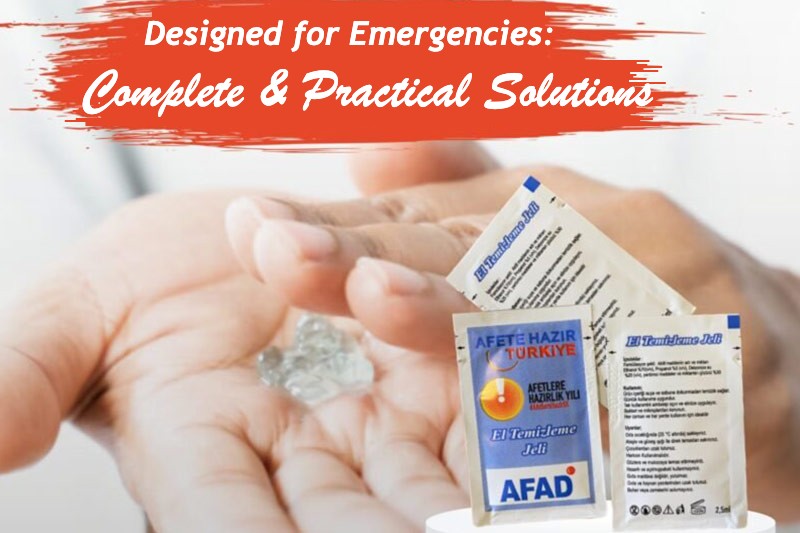
For brand owners and manufacturers with their own formula, contract filling is the fastest way to get a product into single-use packs without investing in a filling line. Not every product fills the same way, though: a runny lotion, a thick cream and a semi-solid such as grease need different filling settings and sometimes different packaging. This guide explains how product consistency affects filling, what RENASAN’s sachet filling options are, and what to prepare before you request a quotation.
Liquid, viscous and semi-solid: why filling changes
- Liquids (lotions, toners, shampoos, hand gels) flow easily; filling speed and avoiding drips before sealing matter.
- Viscous products (creams, masks, serums, gels) flow slowly; consistency needs to be known in advance so that every sachet holds the same amount.
- Semi-solids and pastes (for example grease) need a different filling set-up, and film choice becomes even more important.
Sharing the product’s consistency, ideally its viscosity, and its safety data sheet (SDS) at quotation stage speeds things up.
Sachet filling options
Technical options on RENASAN’s liquid and solid contract filling product pages:
| Feature | Options |
|---|---|
| Sachet width | 5, 6 or 7 cm |
| Sachet length | 6, 8, 10 or 12.5 cm |
| Packaging material | Coated paper, triplex or metallised (customer’s choice) |
| Fill quantity | 1–20 g |
| Fill product | Supplied by the ordering company |
| Corporate logo; up to 3-colour flexo or photo-quality print |
The same options apply to liquid fills and to semi-solid fills such as grease, and cosmetic sachets for creams, serums, masks and shampoos follow the same packaging logic. If you need packs other than sachets, such as tubes or jars, say so in your request.
Choosing the packaging film
Coated paper, triplex and metallised packs differ in appearance, print quality and structure. Which one suits your product depends on the formula and the shelf life you expect, so check seal integrity and ease of opening on a trial fill before deciding. Our guide to film compatibility and seal integrity covers this in detail.
What to include in your RFQ
- Product type and consistency (liquid, cream, gel, paste), with viscosity if available
- Safety data sheet and the product’s intended use
- Fill quantity per sachet (g or ml)
- Preferred sachet size and packaging material
- Artwork and number of print colours
- Total quantity, delivery plan and destination country
The intended use affects packaging and labelling decisions; see sachet filling and intended use. To compare offers, read filling quotations: unit price and total cost.
Trial fill and production
A typical contract filling project runs: information and files, quotation, artwork approval, trial fill and checks, production, packing and shipment. The trial checks fill consistency, seal strength and how the product behaves in the pack. Exact timing depends on the product, packaging supply and quantity, and is stated in the quotation.
Cartons and pallets
Sachet size and units per box decide carton size and how many cartons fit on a pallet. Share your shipping plan early; our guide to sachet carton configuration and pallet planning shows the calculation.
Frequently asked questions
What is the minimum order for contract filling?
It depends on sachet size, material, print and the product itself, and is stated in the quotation.
Can I send my own formula for filling?
Yes. Our product pages state that the fill product is supplied by the ordering company. Share its safety data sheet and intended use at quotation stage.
What fill quantities are possible?
The range on our product pages is 1–20 g per sachet. The right amount is agreed based on sachet size and product consistency.
Request a quotation
Send us your product’s consistency, fill quantity, packaging preference and volumes, and we will prepare a filling quotation. Contact RENASAN.