
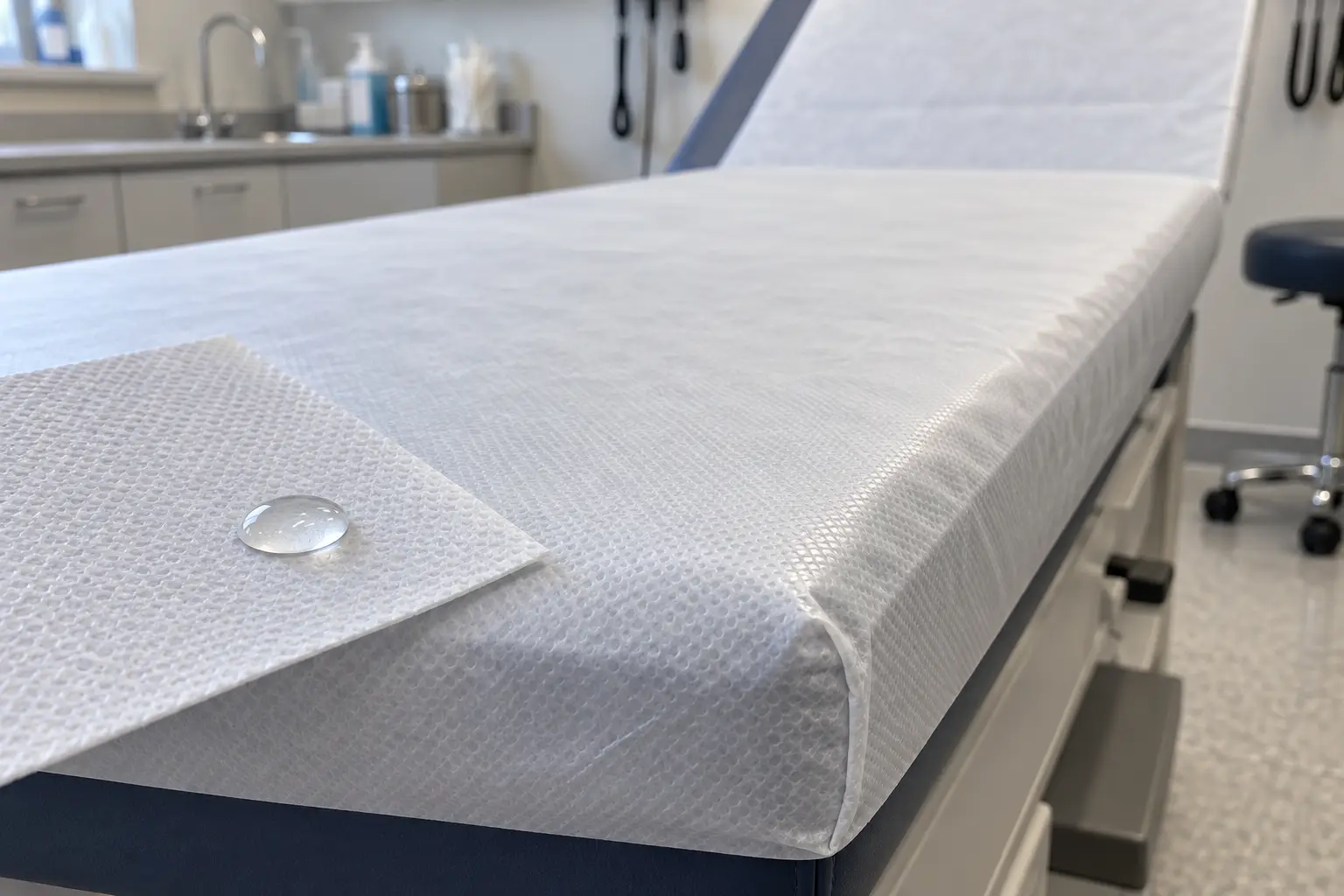
Two examination table covers that look identical in a photograph may not perform the same way in use.
When you spread one over the table, you can see how the material behaves, whether it stays in place throughout use and what happens when it comes into contact with liquid. A product photograph cannot show you these things.
When choosing a medical hygiene product, therefore, consider more than dimensions and appearance. Ask, “Where will this product be used? What material is it made from? What properties does that use require?”
At Renasan, when evaluating a product request, we first try to understand where it will be used. Choosing the right material matters because it can do the expected job, rather than because the product looks good.
If you are looking for a product, do more than send us a photograph: tell us how you will use it.
How should examination table covers be evaluated?
A product photograph, color or unit price cannot fully explain the performance of a disposable examination table cover. In actual use, fit on the table, movement during the procedure, tearing at perforations, material construction and the expected exposure to moisture may all matter. Two products with almost identical appearance can behave differently because their dimensions or underlying materials differ.
Begin by defining the clinical environment and intended use. The construction of the cover should be suitable for the function the buyer expects it to perform. Where protective claims are important, request evidence appropriate to the exact claim and product. A cover that merely looks thicker should not automatically be assumed to offer better liquid resistance.
Dimensions and compatibility with the table
Width and length must be evaluated against the intended table dimensions. For roll products, verify actual roll width, total roll length or sheet count, perforation interval where present, and the usable area of each section. Specify the units rather than relying on expressions such as “standard roll,” which may describe different sizes from different suppliers.
Two rolls with the same price can deliver different usable coverage if one is shorter or narrower. Where area is the relevant purchasing unit, a price per square metre may help compare products fairly. Convert width and length to a consistent unit before calculation. The approach described in our dental tray cover roll-area guide illustrates the measurement logic, although different product types should not be treated as interchangeable.
Why material construction matters
Disposable table covers may use paper, nonwoven materials or multilayer structures. Relevant considerations include integrity during handling, surface feel, wet-state behavior and ease of removal after use. Different products are designed for different requirements, so it is unsafe to assume every construction offers the same absorbency or barrier performance.
Ask two separate questions: How should liquid on the upper surface behave, and how much liquid transfer to the table is acceptable for the intended use? A top layer may help absorb liquid, while a distinct backing may be designed to limit passage. These are different properties, as explained in our guide to absorbency and fluid barriers in dental bibs.
Perforation, roll winding and day-to-day handling
Where rolls use perforated sections, clean separation can improve the workflow. A sheet that tears unpredictably may waste material or slow down preparation between uses. Roll winding, dispenser compatibility, storage space and rolls per carton also affect purchasing suitability.
Whether a cover stays in place is influenced by more than the material alone. Table surface, how the cover is placed and any fixing method may influence movement. If sliding is a concern, test a representative sample on the equipment actually used by the clinic. Verify fit with the existing table and dispenser before placing a larger order.
How to compare samples
When comparing alternatives, use the same table and practical evaluation criteria. Check whether the cover fits, how readily it is placed and removed, whether perforations separate reliably, whether layers delaminate and how the material behaves if exposed to relevant moisture. Record conditions and observations so that comparisons are fair. An informal visual demonstration is not a substitute for any technical or regulatory tests necessary for the intended application.
Identify the approved sample by product code, size, material construction where relevant and specification revision. Use the same reference on purchase orders and at receiving. Our article on repeat-order specifications explains the importance of preventing unintended changes between purchases.
A purchasing comparison table
| Detail | Why it matters |
|---|---|
| Roll width | Determines coverage across the table |
| Roll length or sheet count | Establishes the quantity supplied |
| Perforation spacing | Influences individual sheet length |
| Material construction | May change handling and liquid behavior |
| Rolls per carton | Affects logistics and stock calculations |
| Approved sample reference | Helps maintain product consistency |
The cheapest roll price does not necessarily mean the lowest cost per use. A shorter or narrower roll may be consumed more rapidly for the same number of procedures. Conversely, a higher-priced material should not be assumed superior without showing relevant functional benefits.
Storage and replenishment
Follow the manufacturer’s applicable storage requirements and keep packaging protected from unnecessary moisture or damage. For frequently used consumables, monitor demand and delivery lead times so that replenishment can be planned before inventory runs too low. Our article on medical consumables reorder points describes a practical planning method.
Frequently asked questions
Do similar-looking covers provide identical performance?
No. Dimensions, materials, layers, perforation and roll construction may produce meaningful differences in use.
Does a thicker-looking cover automatically provide greater protection?
No. Suitability depends on the actual construction and performance required under the intended conditions.
How should roll prices be compared?
Verify roll width, length, sheets, packing units and technical specifications. If appropriate, calculate cost per metre or square metre on an equal basis.
Conclusion: Choosing an examination table cover should be based on real application, suitable dimensions and material behavior rather than photographs alone. A representative sample and controlled specifications make purchasing decisions more reliable.